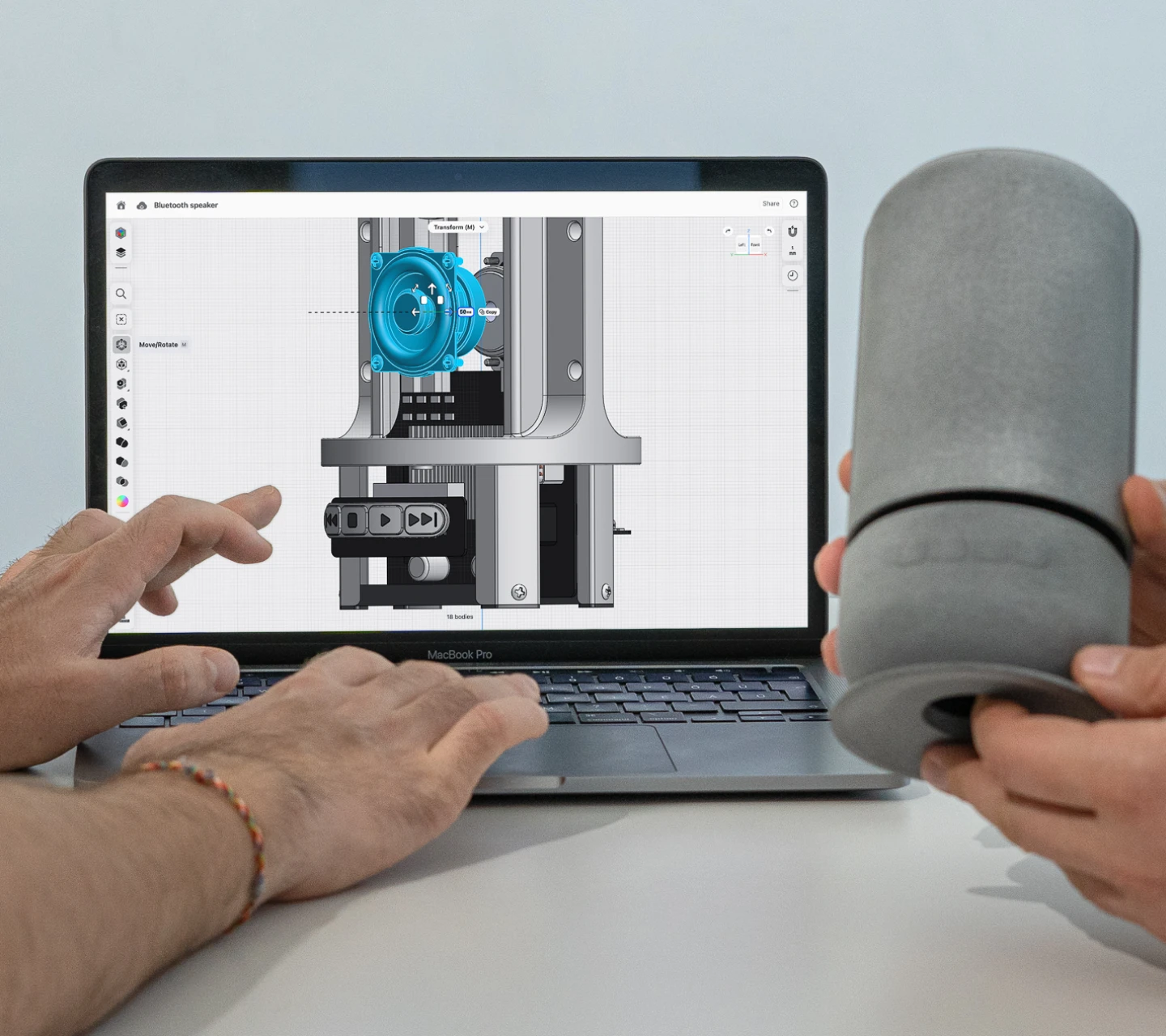
The team operates in strict secrecy and I am under heavy NDAs. But from what's out there, we love libfive.com, an implicit geometric modelling kernel based on signed distance fields. In contrast to existing kernels like Siemens' Parasolid and Fusion's ShapeManager, which are based on Bézier curves and B-spline mathematics. The kernel does many cool things: constructive solid geometry is trivial, you can have really high resolution (down to floating-point accuracy!), and blends and warps are expressed naturally.
An equational representation is far more beautiful than the existing mess of B-splines. The family of minimal Schwarz surfaces like gyroids are simple to represent. Imagine that in your everyday CAD!
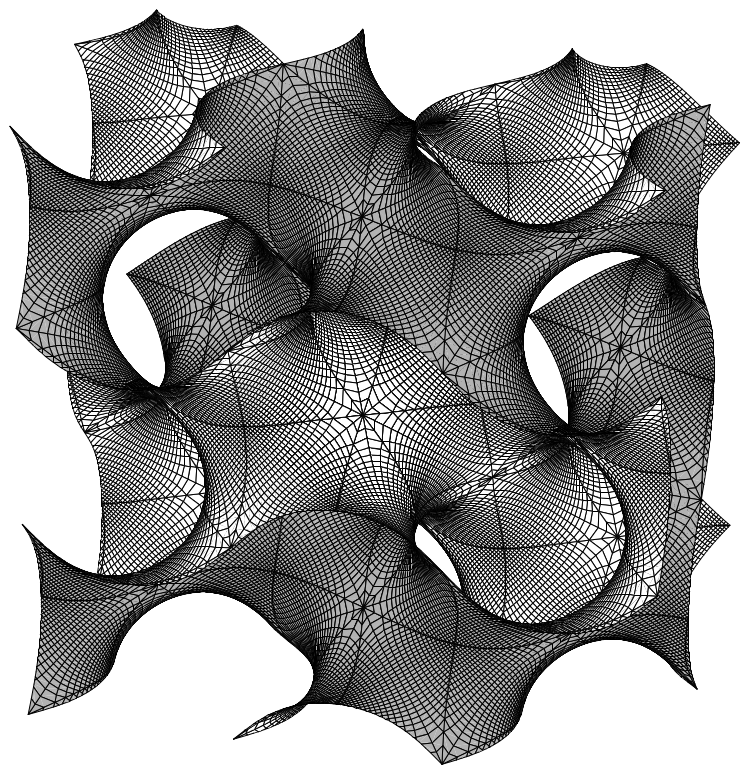
Converting the equations into usable meshes is quite tricky. Classic methods like dual contouring and marching cubes have a terrible quality-to-compute ratio. I helped develop what is believed to be the best meshing algorithm. We combined recent research and spun them with our own algorithmic advancements to make something that can handle sharp features, floating bodies, and thin sheets more efficiently and with the best quality. Our work is being wrapped up into a paper.
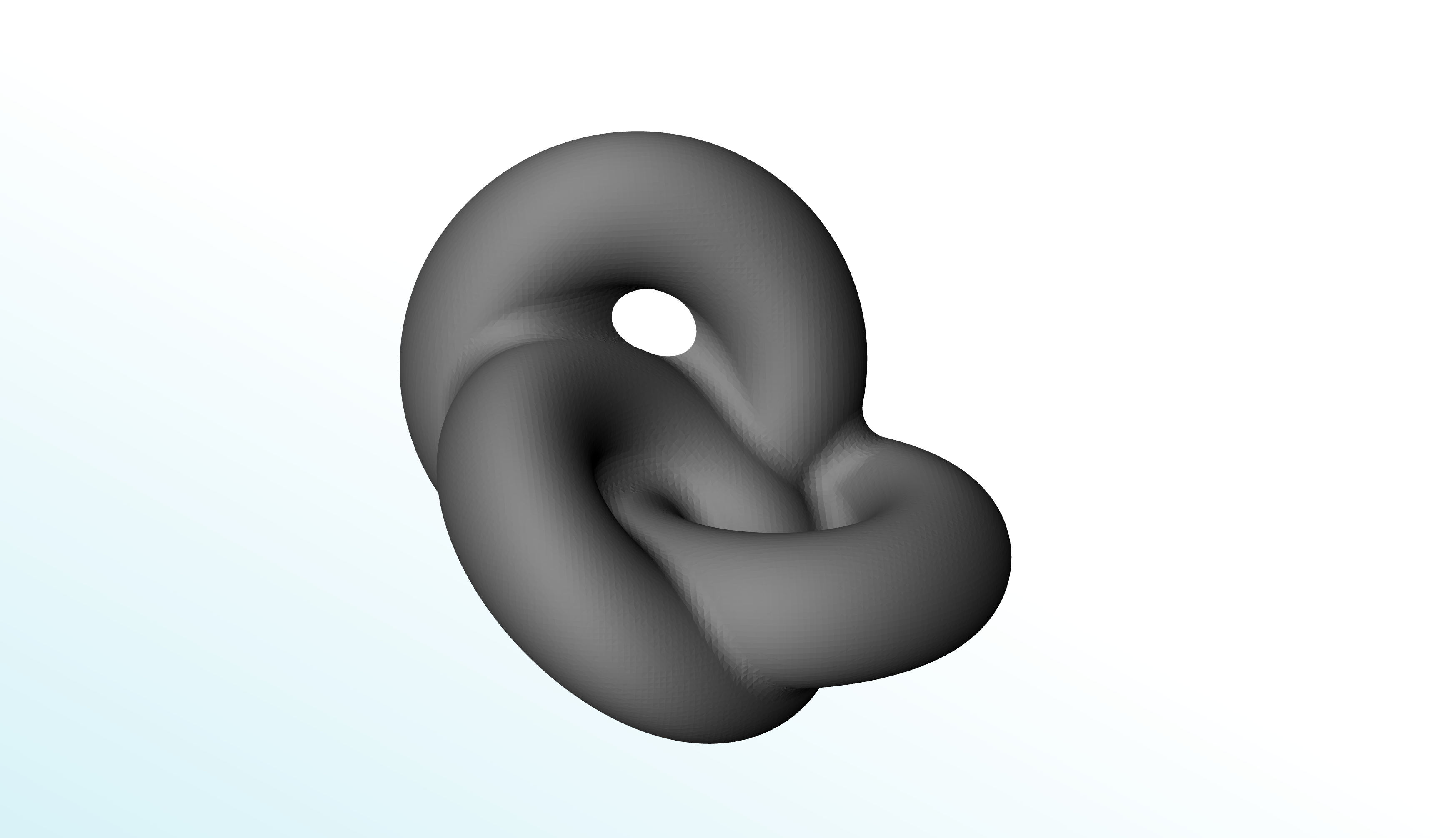
The rest of the summer I spent implementing the rolling ball blend—a fundamental CAD operation that fillets edges to make them prettier. Creating a robust primary operation gave me a sense of what the early creators of the mouse would have felt like. There is nothing else on the planet that can work better in many edge cases and situations like this. You can blend more complex surfaces together like donuts. It's exciting what people will be able to create with this.
I learned a lot there. Research is hard. Going into the mathematical unknown with a very faint realization of an idea and crystallizing it into a solid concrete idea that seems obvious in hindsight is perhaps the most challenging thing ever. István and his team do it so flawlessly. It's also a really nice feeling knowing that something I helped bring to fruition will be used by millions of people, and hopefully they feel the love that we've put into it.
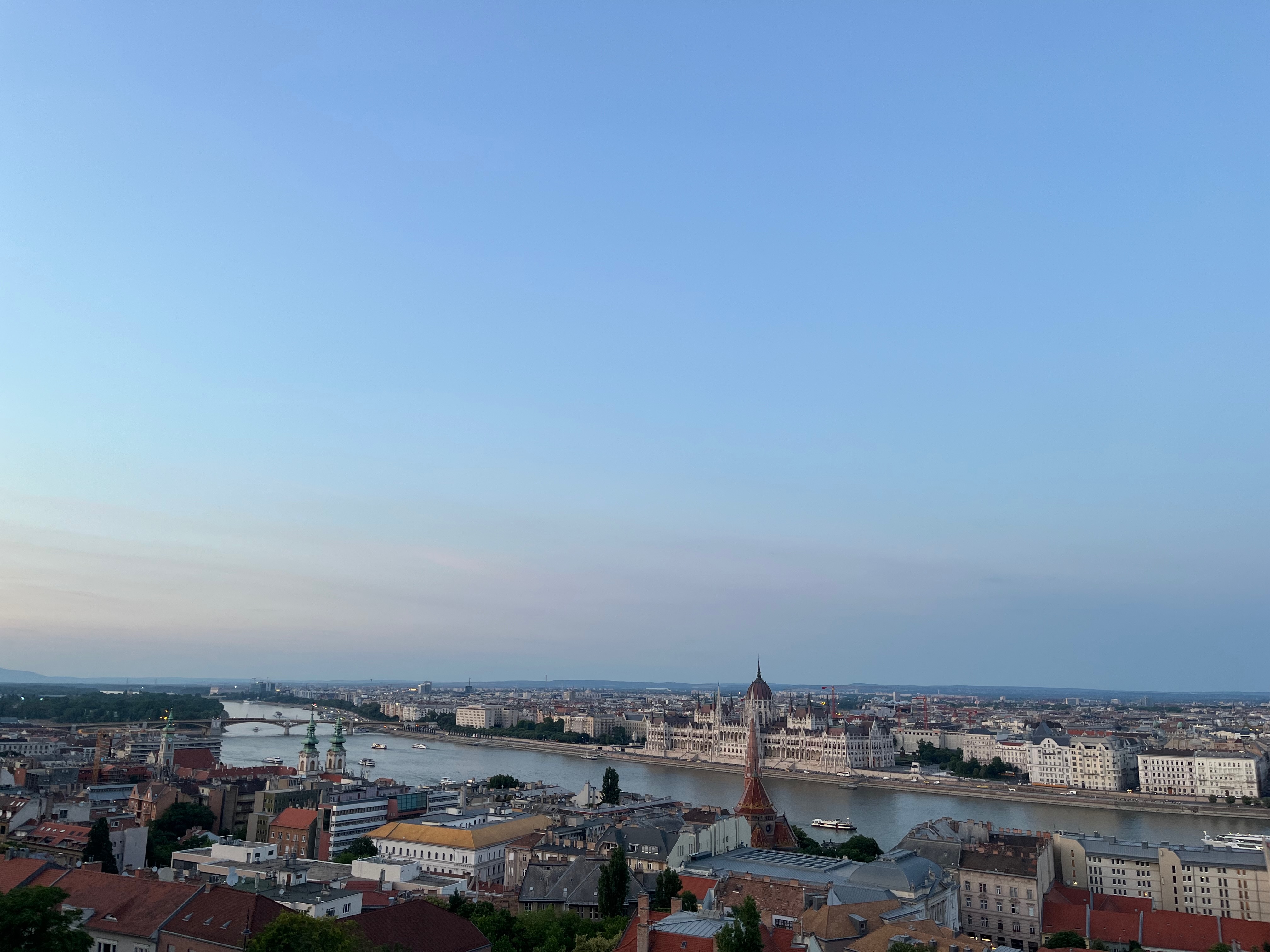
It's truly quite incredible how a small group of people in Budapest—and István, who started the company from really humble beginnings—built this. Now the phone in your pocket most likely has been designed in Shapr3D ;). And this is just the beginning for the company. Let Shapr3D reign supreme!
During my time there, I also recorded content in the style of SmarterEveryDay. There is a surprising amount of really cool stories that never get the public light and are at risk of being lost to time...